A compound to remember: For a long time, 5-hydroxymethylfurfural, or HMF for short, was only known to most people as evidence of highly processed foods. The aldehyde/furan compound is formed during the thermal decomposition of sugar or other carbohydrates and is responsible for the typical aroma of browned food in the Maillard reaction, among other things. Now chemists are increasingly getting a taste for it, having discovered HMF as a potential platform chemical for biobased polymer chemistry.
The AVA, for example, comes up with over 175 chemicals, from PET substitutes to solvents, which could be produced from HMF (molecular formula C6H6O3). According to the experts, HMF is therefore recommended as a so-called platform chemical, from which - similar to fossil naphtha - a variety of other products could be synthesized. Such substances (such as lysine, muconic and succinic acid) are in demand when it comes to defossilizing material value chains. And yet, despite all the sustainability debates, the raw materials from the field are not in an easy position. There is too much mistrust in parts of the population that biopolymers would steal food from the plates of the world's poorest people.
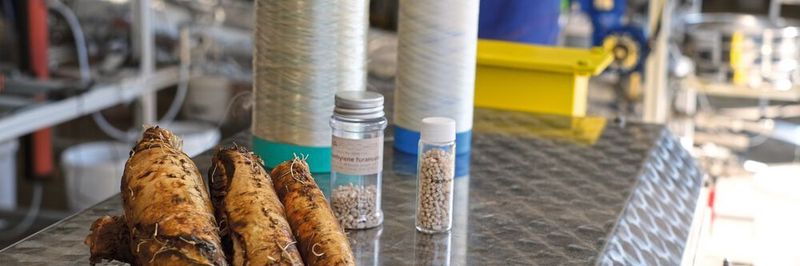
And what about crops that nobody likes to eat? Take chicory, for example - not everyone likes the bitter taste of lettuce. But the thick root of the plant doesn't even make it onto the plate of convinced vegetable fans. Once the typical buds have sprouted in the forcing plant, it's time for the chicory to be removed! Around 800,000 tons of roots are cut off in Europe every year and disposed of as compost.
A lot is lost in the process: in autumn, the milky juice of the beet contains an average of 15 to 20 percent inulin, a fructose-based polysaccharide. The plant's energy store goes to waste unused. As early as the 18th century, the roots were roasted to make an inexpensive coffee substitute.
Roasted - and stirred: HMF from the root
Wait a minute - roasted sugar? Wasn't there something about HMF? HMF can indeed be extracted from the chicory root, just like from fructose - but unlike fructose, no valuable foodstuff is thrown into the reactor, explains agricultural engineer Prof. Dr. Andrea Kruse from the University of Hohenheim. Kruse and her team have developed a multi-step process chain that could turn farmers into chemical producers.
Watch the report that was broadcast on German television (SWR).